
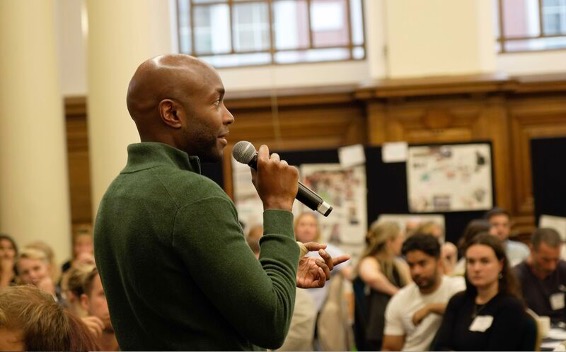
Richard Etienne is the founder of The Introvert Space™ – a support and training platform dedicated to helping introverts thrive in the workplace. With experience in government, having worked alongside former UK Prime Ministers, and roles at leading newspapers such as The Guardian, Richard shares his insight into leadership presence and authentic communication.
What inspired you to create The Introvert Space?
It began in 2017 when I started running a Masterclass with The Guardian designed to help introverts have their voices heard in environments that favour extroversion. The stories people shared during those sessions were strikingly consistent. Thoughtful, capable professionals were doing excellent work, yet struggling to be seen or recognised. It became clear that this wasn’t an individual confidence issue, but a widespread one.
My own career mirrored that experience. Across government, media and corporate settings, I often found myself among people delivering real value while quietly being overlooked. Much of the corporate world appeared to reward volume over substance.
Working inside No.10 as the Prime Minister’s official videographer sharpened that observation. You see very quickly how influence actually works. It isn’t always the loudest voice that carries weight. More often, it’s the person who understands timing, framing, and when to let silence do some of the work.
That realisation led to The Introvert Space. The aim was never to “fix” introverts, but to help organisations recognise a broader range of leadership strengths. Once you start noticing how much talent sits quietly in plain sight, it becomes impossible to ignore.
You describe introversion as being about energy rather than shyness or confidence. How can organisations understand this distinction better?
One of the most helpful shifts organisations can make is to understand introversion as an energy pattern, not a personality flaw. I often simplify it as how someone ‘gains or drains energy’.
Many introverted people do their best thinking away from constant stimulation. They tend to reflect first and speak once ideas have fully formed. Rather than interpreting this as hesitation or disengagement, it’s more accurate to see it as a different route to clarity and contribution.
Modern workplaces often reward immediacy: quick reactions, spontaneous opinions and visible participation. When those behaviours become shorthand for engagement, quieter forms of thinking are easily overlooked. Even now, with the rise of AI, there’s an emphasis on being fast or first when contributing ideas, which can push introverted voices even further to the margins.
Simple design choices can make a real difference. Sharing agendas in advance, inviting written input, or building in moments for reflection after meetings all create more inclusive ways to contribute. When organisations stop confusing energy with enthusiasm, a great deal of insight suddenly comes into view.

Richard appearing on the BBC Radio 4’s The Bottom Line for a conversation and episode on Introverts: Can Quiet Voices Conquer The Corporate World?
You’ve had a diverse career across government and media. How has your personality type influenced your leadership style?
I’d say my introversion has strongly shaped how I observe power and take responsibility.
I’ve always been inclined to watch closely before acting, and that instinct proved valuable in high-pressure environments, particularly in government, where judgement and restraint matter. Being behind the lens of power at No.10, I was rarely the centre of attention, but I was constantly reading the room. You quickly learn which moments matter, how trust builds quietly, and why timing often outweighs urgency.
That way of working has carried into my leadership roles. I tend to lead through preparation, clarity and consistency. Presence, for me, has never been about dominance. It’s about being steady, attentive and intentional, and creating the conditions where others can do their best thinking too.
Many leadership programmes still prioritise “commanding the room.” How can we redefine leadership presence to include quieter styles?
Leadership presence expands when it’s no longer reduced to performance alone.
Confidence and projection have their place, but they’re only one expression of authority. Presence can also show up as calm decision-making under pressure, asking the question that shifts the direction of a conversation, or listening carefully before responding.
When organisations broaden what they recognise as presence, more people are able to lead in ways that feel natural and sustainable. The result is often better judgement, stronger collaboration and fewer performative dynamics.
Entrepreneurs often feel pressure to sell themselves loudly. How can introverted founders market themselves authentically?
Introverted founders don’t need to become louder; they need to become clearer.
Marketing doesn’t have to mean constant self-promotion. At its best, it’s about articulating a point of view, explaining why your work exists, and showing how it genuinely helps people.
Many introverted founders thrive when they focus on substance. Thoughtful writing, well-framed conversations and consistent messaging often travel further than bursts of high-energy visibility.
A useful starting question is: What do I want people to understand about my work? Once that’s clear, the path forward usually becomes simpler.
What advice do you have for introverts navigating networking, pitching or public speaking?
These environments tend to reward speed and sociability, so approaching them with intention really matters.
In networking, depth is often more valuable than breadth. One meaningful conversation can have more impact than several brief exchanges.
For pitching and public speaking, preparation creates steadiness. Knowing your opening, your core message and your close makes a real difference. Silence doesn’t need filling; it can give ideas space to land.
Choosing formats that suit you also helps. Fireside chats, panels and structured Q&A often allow introverts to contribute fully without unnecessary depletion.
You’ve written that workplaces often reward visibility over value. How does that show up in practice?
It usually shows up in who gets noticed.
People who speak frequently are assumed to be engaged, while those working quietly behind the scenes are often overlooked, even when their contribution is significant.
Over time, this shapes opportunity. Influence, recognition and progression begin to cluster around visibility rather than impact.
Leaders can rebalance this by paying closer attention to outcomes. Who improves processes? Who steadies teams? Who brings insight that changes decisions? When value is recognised deliberately, organisations become fairer and more effective.
The idea of personality inclusion is powerful. What small changes can organisations make to support introverts better?
Small design choices can make a big difference.
Sharing information in advance, welcoming written input, and allowing time for reflection all make participation more accessible.
These changes don’t single anyone out. They simply widen the ways people can contribute. When organisations design for difference as standard practice, everyone benefits.
Finally, how can organisations measure whether they’re supporting both introverts and extroverts effectively?
One useful signal is whose ideas shape decisions.
If influence consistently comes from the same voices, something is being missed. When insight from quieter contributors regularly informs outcomes, the system is working.
Another indicator is sustainability. Cultures where people can contribute without exhaustion or constant self-editing tend to be healthier over time.
Supporting different personality types isn’t about balance for its own sake. It’s about creating conditions where good thinking travels, however it arrives.
To find out more about Richard and his work, you can connect with him on LinkedIn or visit his website The Introvert Space.
Also look out for Richard’s new report coming out in June on Personality at Work, in collaboration with Ipsos and the Institute of Internal Communication. It brings together never-before-measured behavioural insight and workplace data from the UK’s largest employee experience research company, exploring how personality shapes experience, communication, visibility and progression at work.

bhhh